
Personality Type Test: the Complete Guide to Self-Discovery
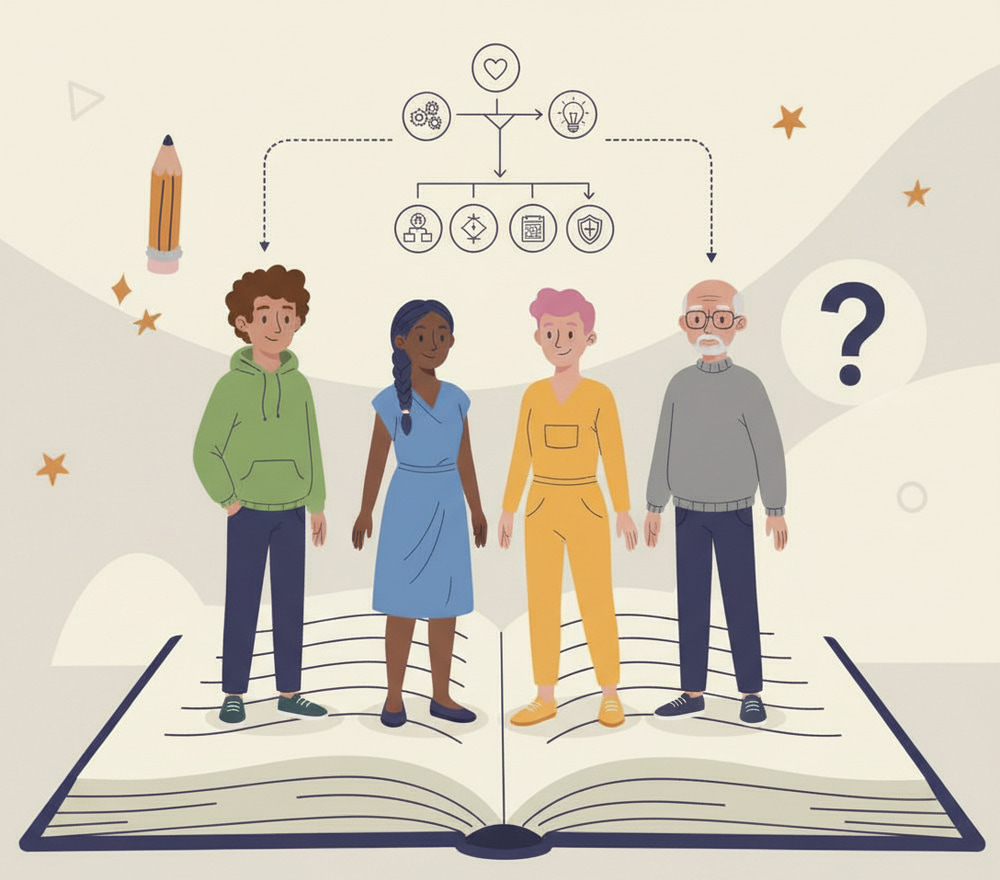
Find Your Personality Type With Test
Get StartedWhat Personality Typing Really Measures
Behind every popular typing framework sits a set of psychological constructs such as trait preferences, cognitive styles, and behavior patterns. In practice, a personality type test translates abstract tendencies into practical language you can use. Instead of guessing, you analyze repeatable patterns in how you focus attention, make decisions, and respond under pressure. These patterns cluster into recognizable profiles that summarize strengths, blind spots, and likely stress behaviors. The goal is not a box but a map, providing navigation cues rather than rigid labels. Used responsibly, results support nuanced conversations about work, relationships, and personal growth.
Critically, solid assessments balance reliability with approachability so newcomers are not overwhelmed. In that spirit, guided steps can help you find your personality type by connecting everyday choices to validated scales. Examples include reflecting on how you recharge energy, what information you trust first, and how you prefer to organize commitments. Even small observational shifts, like noting when you seek closure versus keep options open, can illuminate default preferences. Over time, these insights form a coherent portrait that feels both accurate and actionable. That clarity is most valuable when you test insights in real situations across contexts.
How Assessments Are Built and Scored
Most modern instruments start with a theoretical model, then craft items that discriminate between adjacent preferences without shaming any option. For many users, a personality type quiz feels simple on the surface while quietly applying statistical weights behind the scenes. Well-written statements avoid leading language, mix positively and negatively keyed items, and rotate contexts to reduce response bias. After you respond, algorithms score patterns, check internal consistency, and map results to a typology. Good tools also present confidence bands so you see which facets were close calls versus clear signals.
Scoring approaches vary, including ipsative formats, normative comparisons, and adaptive branching that changes questions in real time. With clear feedback, you can determine your personality type while understanding the margin for ambiguity in borderline areas. That nuance matters because context, mood, and experience can temporarily nudge answers without rewriting core preferences. As a result, the best practice is to combine test output with reflective journaling, trusted peer observations, and follow-up conversations. Taken together, these inputs turn a static report into an evolving self-portrait.
- Balanced items that cover multiple contexts and avoid jargon.
- Transparent scoring explanations and clear definitions of each dimension.
- Confidence indicators that reveal borderline results and alternative reads.
- Actionable guidance that bridges insight and behavior change.
Benefits and Real‑World Applications
Insight without utility is trivia, so the real power of typing shows up in daily decisions. At work, understanding your personality type can guide role selection, collaboration styles, and feedback preferences. Leaders leverage that knowledge to assemble complementary teams and to anticipate friction before it escalates. Students use it to choose study strategies, plan time, and pick projects that showcase strengths. Creators align it with routines that protect focus while keeping inspiration fresh. Couples translate differences into shared language, which lowers defensiveness and raises empathy.
To bring these ideas to life, consider common scenarios that regularly trigger stress or indecision. In those moments, the internal voice asking what personality type am i becomes a prompt to examine patterns rather than judge yourself. Do you energize through brainstorming or through quiet preparation? Do you trust data first, or narratives first, when time is short? Do you default to decisive closure, or do you prefer to keep options flexible while exploring? Answering these consistently across situations reveals where your preferences shine and where they need guardrails.
- Align tasks with natural energy rhythms to reduce avoidable friction.
- Set communication norms that respect different decision speeds.
- Pair teammates with complementary strengths for high-stakes projects.
- Create personal checklists that prevent overuse of your favorite habits.
Choosing the Right Assessment and a Quick Comparison
Not every instrument fits every situation, so selection should match your goals, time, and tolerance for nuance. For casual exploration, an approachable format like a my personality type quiz can offer fast, low-friction insights before deeper study. For coaching or organizational development, you may want validated tools with richer reports and facilitator support. Clarity about purpose prevents mismatches that lead to skepticism or misuse.
Cost is also a factor, especially when equipping a class, a team, or a community. When budgets are tight, a reputable personality type test free can act as a gateway while you evaluate premium options. Look for transparent explanations, sample reports, and evidence of iterative improvement. Avoid tools that overpromise certainty, shame certain results, or gate basic definitions behind paywalls.
| Framework | Primary focus | Ideal use case | Typical length | Cost range |
|---|---|---|---|---|
| Big Five (OCEAN) | Trait continua across five domains | Academic grounding and nuanced coaching | 7–20 minutes | Free to moderate |
| Jungian preference model | Preference pairs and functional lenses | Team dynamics, communication, career exploration | 8–15 minutes | Free to premium |
| DiSC model | Interaction and influence patterns | Sales enablement and conflict reduction | 10–20 minutes | Moderate |
| Strengths-based inventory | Natural talent themes and energy | Role design and performance coaching | 15–25 minutes | Premium |
- Match the model to the decisions you need to make right now.
- Favor instruments with clear development paths, not just labels.
- Pilot with a small group before scaling across a team or class.
Interpreting Results, Avoiding Pitfalls, and Growing Forward
A report is a starting line, not a verdict, and the most valuable insights emerge after you experiment. During this period, it helps to translate insights from my personality type into small behavior experiments you can evaluate. Try pairing a natural strength with an intentional counterbalance, such as adding reflection time after fast decisions. Likewise, borrow tactics from opposite preferences to expand range without abandoning your center. When you iterate, feedback loops sharpen self-awareness and prevent stale routines from calcifying.
Pitfalls lurk when labels become excuses or when results are used to gatekeep opportunities. Instead of asking only personality type am i, consider what outcomes you want and which habits will actually move the needle. Track situations, note energy gains or drains, and update your playbook as evidence accumulates. That iterative approach builds resilience and keeps the model in service of growth, not ego. Over months, the compounding effect of small improvements outperforms any single insight from a one-time report.
- Which situations consistently energize or drain you, regardless of topic?
- What opposite-preference behavior could you try safely this week?
- How will you measure whether a new tactic improved outcomes?
FAQ: Personality Typing Simplified
Are personality types fixed or can they change over time?
Core preferences tend to be stable, but expression can flex with context, maturity, and deliberate practice. Life events, new responsibilities, and skill development often broaden your behavioral range without erasing underlying patterns. That is why periodic reflection helps you spot growth while honoring your authentic center. The aim is agility, not reinvention.
How accurate are online assessments?
Quality varies widely, which is why you should look for clear methodology, reliability data, and practical guidance. In moments of curiosity, the nudge to ask whats my personality type is best paired with tools that disclose how items were validated. Consistency across retakes, sensible language, and aligned results with your lived experience are strong indicators of accuracy. Whenever possible, combine results with feedback from people who know you well.
How should I use my results at work or school?
Treat them as a hypothesis that informs choices about communication, energy management, and focus. Translate insights into specific agreements, such as meeting formats, handoff protocols, and study routines. Revisit those agreements after real projects to adjust for context. Over time, this loop turns awareness into measurable performance gains.
What should I do if my results feel inconsistent?
Start by reviewing items that felt ambiguous and consider whether context influenced your answers. In that review, it helps to reframe the question from labels toward utility by exploring what my personality type implies for daily habits and decision checkpoints. Gathering a week of observations often reveals stable trends underneath momentary noise. If uncertainty persists, try a second instrument grounded in a different model for triangulation.
Can I use typing to improve relationships?
Absolutely, because shared language lowers misinterpretation and enables clearer expectations. Translate differences into agreements about communication cadence, problem-solving styles, and decompression time. Instead of pathologizing contrasts, treat them as complementary assets that need coordination. With practice, that mindset builds trust and reduces avoidable conflict.